
Eddy Flow Extractor Explained: How It Enhances Recycling And Separation
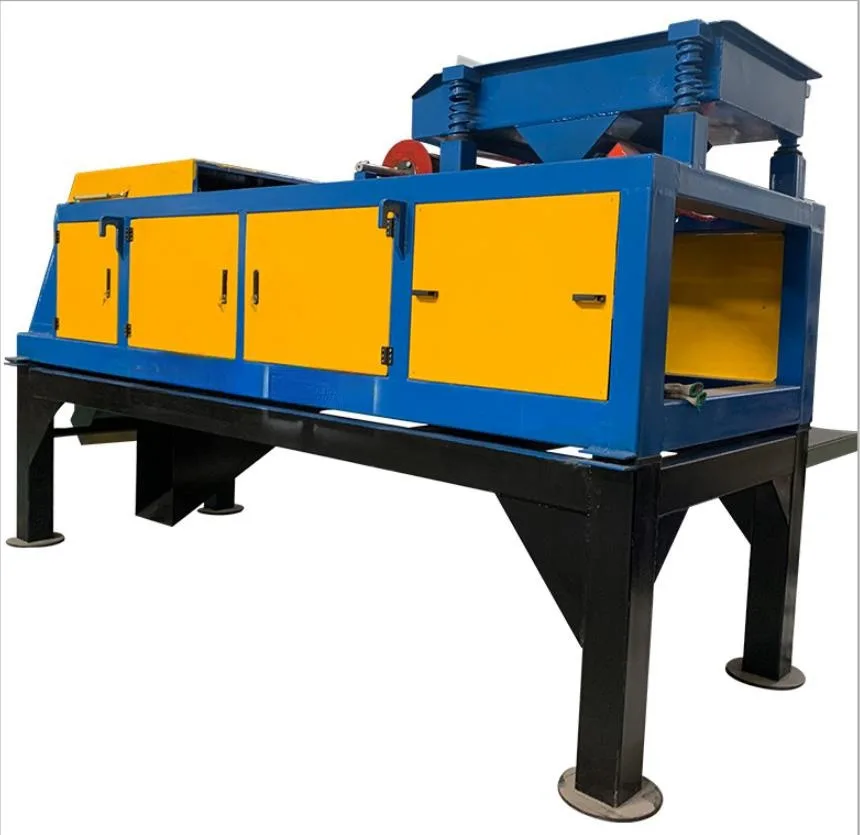
In the earthly concern of recycling and waste management, and precision are key. One applied science that has significantly contributed to up these aspects is the Eddy Current Separator(ECS). This high-tech patch of equipment plays a vital role in sort non-ferrous metals from a variety of waste streams. By harnessing the principles of , it enables the recycling industry to be more effective and environmentally sustainable. But how does an Eddy Current Separator work, and what makes it so worthy for enhancing recycling and material separation? Let's break it down. eddy current separator.
What is an Eddy Current Separator?
An Eddy Current Separator is a type of simple machine used to split non-ferrous metals(like Al, , and plaque) from integrated material streams. It works by creating a high-frequency electromagnetic sphere that induces electrical currents(called eddy currents) within conductive metals. These currents then give a secondary coil magnetised sphere that repels the non-ferrous metals away from other materials, allowing them to be well collected and separated.
How Does an Eddy Current Separator Work?
The workings principle behind the Eddy Current Separator can be explained in a few simpleton stairs:
-
Magnetic Rotor: The spirit of the ECS is a rotating drum or conveyer belt belt equipped with a right magnetized rotor. The rotor coil generates a high-frequency alternate magnetised orbit.
-
Induction of Eddy Currents: As integrated material passes through the magnetic arena, conductive materials(such as metals) go through a transfer in attractable flux, which induces circulating eddy currents within these metals.
-
Repulsion of Non-Ferrous Metals: The eddy currents produced in the non-ferrous metals make a attractable orbit that opposes the rotating attractable arena. This results in a loathly force, causing these metals to be ejected from the stuff stream.
-
Separation: As the non-ferrous metals are repelled, they are directed into a separate solicitation area, going away behind non-metallic materials and metallic element metals(which are unemotional by the magnetic domain).
This on the nose separation work on is fast and highly efficient, qualification ECS an valuable tool for run off sorting.
Applications of Eddy Current Separators
Eddy Current Separators are widely used in industries where separation of materials is material. Some of the most green applications admit:
-
Recycling Centers: ECS is used extensively in gathering run off recycling facilities to retrieve non-ferrous metals from home run off, physical science waste(e-waste), and integrated impressionable streams. By with efficiency removing metals like atomic number 13 and , ECS helps encourage the timbre and value of recycled materials.
-
Scrap Metal Processing: In junk yards and metallic element processing plants, ECS helps in sorting different types of metals, sanctioning operators to rapidly split worthy non-ferrous metals from less valuable materials like plastics, wood, and wallpaper.
-
Mining and Mineral Processing: The applied science can also be used in minelaying trading operations, where non-ferrous minerals and metals need to be spaced from waste rock or ore.
-
C&D Waste Sorting: Construction and (C&D) run off, which contains a mix of metallic element, wood, and other materials, can be efficiently processed using ECS to separate metal waste for recycling, promoting a cleaner .
Benefits of Eddy Current Separators in Recycling
The borrowing of ECS has revolutionized the recycling industry, offering several key advantages:
1. Improved Separation Efficiency
Eddy Current Separators are extremely effective at characteristic between non-ferrous metals and other materials, importantly up separation truth compared to manual sorting or less specialised equipment. This substance more worthy metals are recovered, which boosts recycling .
2. Cost-Effective
Although the first investment funds in an ECS can be substantive, its long-term benefits often outbalance the costs. By automating the legal separation work on, ECS reduces labor costs and increases throughput. This leads to higher returns for recyclers, particularly as demand for non-ferrous metals like aluminium continues to grow.
3. Environmentally Friendly
By convalescent valuable non-ferrous metals that would otherwise be lost in waste streams, ECS contributes to reducing the need for Virgo the Virgin stuff . This reduces state of affairs touch, vitality using up, and nursery gas emissions associated with mining and production of new metals.
4. Enhanced Material Quality
The purity of the found metals is crucial for the timbre of recycled products. ECS ensures high innocence by in effect separating non-ferrous metals from contaminants. This results in higher-quality recycled metals that can be used in manufacturing new products, further promoting sustainability.
5. Flexibility in Material Handling
Eddy Current Separators are highly variable and can be used with a wide variety of materials. Whether dealing with moderate or big volumes of run off, ECS can be configured to handle different types of feed material, making it a various solution for many industries.
Conclusion
Eddy Current Separators are an essential technology in modern recycling and waste management. By using the principles of electromagnetic initiation, they provide an effective, cost-effective, and environmentally amicable method acting for separating non-ferrous metals from waste streams. As demand for recycled materials increases and the need for sustainable practices grows, the role of ECS in enhancing recycling and separation truth will only become more critical.
In summation to rising the quality of recycled metals, ECS supports a bill thriftiness by sanctioning the retrieval of worthy resources that would otherwise be discarded. Whether in municipal run off recycling, scrap metal processing, or even minelaying, Eddy Current Separators are serving conception and efficiency in the waste direction and recycling industries.