
Elevate Your Mix Premier Audio Tools for Every Musician
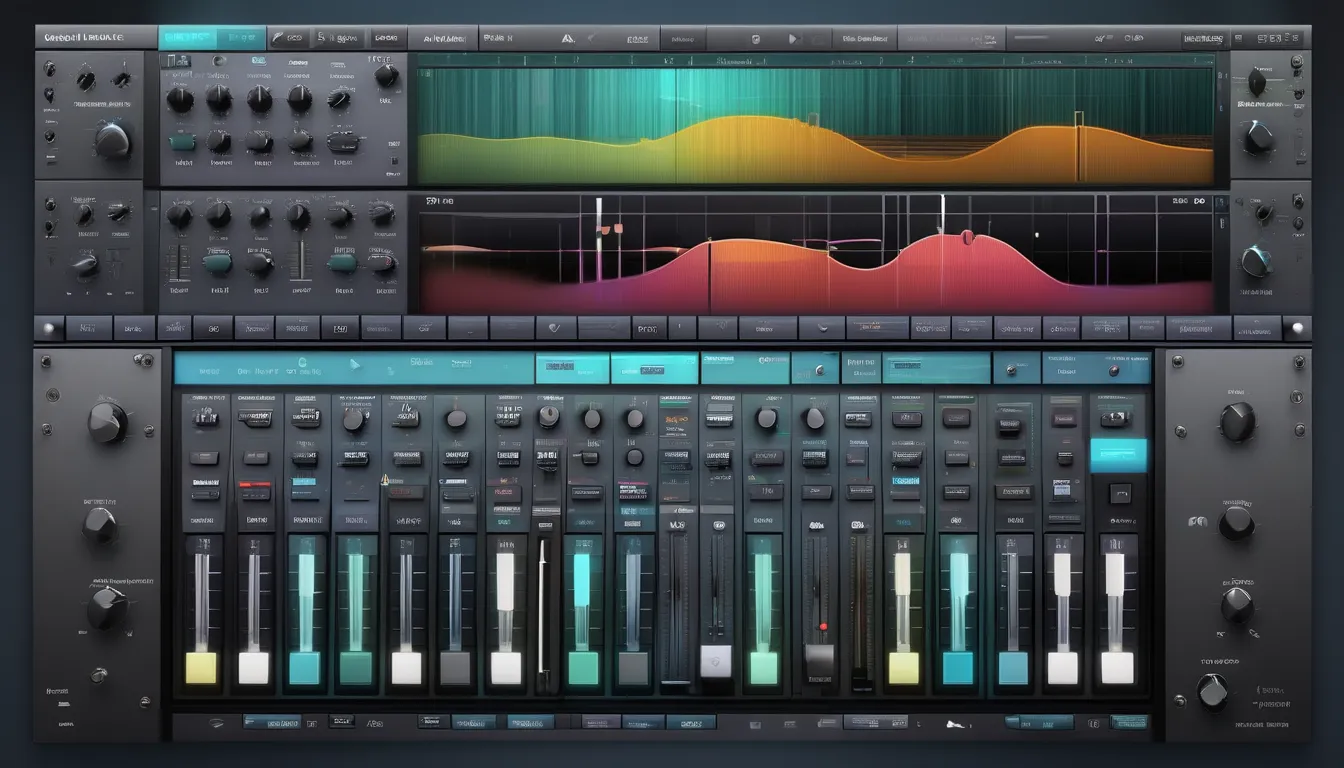
You’re no stranger to the importance of high-quality audio tools in elevating your mix. Whether you’re a seasoned musician or just starting out, having the right equipment can make all the difference in producing a professional-sounding track. You’ve likely experimented with various digital audio workstations and plug-ins, but what about the hardware and acoustic aspects of your setup? Choosing the right studio monitor speakers, audio interface, and acoustic treatment solutions can be overwhelming, especially with the numerous options available. What are the key tools you need to take your music production to the next level?
Top Digital Audio Workstations
Most musicians rely on digital audio workstations (DAWs) as the central hub of their music production setup. You’ll find several top-notch DAWs on the market, each with its strengths and weaknesses.
Ableton Live, for instance, is ideal for live performances and electronic music production. Its seamless integration with MIDI controllers and effects processors makes it a favorite among electronic music artists.
Logic Pro, on the other hand, is a professional-grade DAW popular among producers and engineers who work on large-scale projects. It offers a vast library of plugins and a user-friendly interface that streamlines your workflow.
FL Studio, formerly known as FruityLoops, is a versatile DAW suitable for hip-hop and electronic music production. It features a beat-oriented workflow and a vast library of plugins and effects.
When choosing a DAW, consider your production style, the type of music you make, and your system’s specifications.
You may also want to try out demos before committing to a particular DAW. Ultimately, the right DAW for you is one that complements your creative workflow and helps you produce high-quality music efficiently.
Essential Mixing Plug-ins
Your DAW is the foundation of your music production setup, but it’s the mixing plug-ins that help shape the sound and bring your tracks to life. A good set of plug-ins can make all the difference in achieving a professional mix.
You’ll want to start with a solid EQ plug-in, which allows you to adjust the tone and balance of individual tracks. A good compressor will help even out dynamic ranges and control the overall level of your mix.
A reverb plug-in can add depth and space to your tracks, while a delay plug-in can create interesting rhythmic effects. A limiter plug-in is essential for preventing clipping and distortion, ensuring your mix translates well to different playback systems. You’ll also want a stereo widener to enhance the sense of space in your mix.
When choosing plug-ins, consider your specific needs and the style of music you’re producing. Some popular plug-in options include FabFilter Pro-Q, Waves C4, and Valhalla Room. By incorporating these essential mixing plug-ins into your workflow, you’ll be well on your way to crafting a polished, professional-sounding mix.
Studio Monitor Speakers
Immerse yourself in accurate sound reproduction with a pair of high-quality studio monitor speakers. These speakers are specifically designed to provide you with flat frequency response and uncolored sound, allowing you to hear your mix exactly as it is.
When choosing studio monitor speakers, consider the size of your recording space and the type of music you produce. Smaller rooms may benefit from smaller speakers, such as 3- or 4-inch woofers, while larger rooms may require 6- or 8-inch woofers.
It’s also essential to decide between active and passive speakers. Active speakers have built-in amplifiers, making them easier to set up and use. Passive speakers, on the other hand, require an external amplifier, but offer more flexibility and control.
Another crucial factor is the speaker’s frequency response. Look for speakers that can accurately reproduce the entire frequency range, from low bass notes to high treble.
When positioning your studio monitor speakers, place them at ear level, angled inward, and at a distance of about 3-4 feet from your listening position. This setup will help you achieve accurate sound reproduction and make better mixing decisions.
Audio Interface Options
When connecting your gear to a computer, you’re relying on an audio interface to convert analog signals into digital data. This crucial step in your signal chain requires a reliable and high-quality interface.
You’ll want to consider the number of inputs and outputs you need, as well as the type of connectors required for your equipment. USB and Thunderbolt interfaces offer fast data transfer and easy connectivity, while PCI and PCIe cards provide a more permanent solution.
Choose an interface that suits your recording setup, whether it’s a solo project or a full-band production. Look learn how to produce music low latency and high-resolution audio capabilities, such as 24-bit or 32-bit, to ensure accurate sound reproduction.
Popular audio interface options include the Focusrite Scarlett series, PreSonus AudioBox, and Native Instruments Komplete Audio 1. Be sure to check compatibility with your computer’s operating system and digital audio workstation (DAW) software.
Acoustic Treatment Solutions
Effective acoustic treatment is crucial in any recording space, as it directly impacts the quality of your sound. You’ll want to address echo, reverberation, and flutter echo by using absorption and diffusion panels strategically.
Start by identifying areas where sound waves tend to bounce around, such as corners and walls, and place absorption panels like acoustic foam or fiberglass there.
Diffusion panels, which scatter sound waves in different directions, work well on walls and ceilings. Bass traps, specifically designed to absorb low-frequency sound waves, should be placed in areas where bass buildup occurs, like corners.
It’s also essential to treat the room’s early reflections – the first bounce of sound waves off surfaces near the listening position. By using a combination of absorption and diffusion panels, you can minimize echoes and sound reflections, resulting in a more accurate and controlled listening environment.
Investing in a well-designed acoustic treatment solution will allow you to focus on the music, rather than fighting the room’s sound.
Conclusion
You’ve got the tools to elevate your mix – now it’s time to put them to use. Invest in a top digital audio workstation that fits your needs, and pair it with essential mixing plug-ins to refine your tracks. Accurate studio monitor speakers and a reliable audio interface will help you make informed mixing decisions. Finally, treat your space with acoustic panels to minimize echoes and reflections. With these premier audio tools, you’ll be well on your way to creating professional-sounding mixes.